Your own rhythm, measured.
Six weeks of your heart rhythm and temperature, recorded at home before you arrive, so everything is read against you and not against a population average.

Board-certified physician for the female brain.
Hormones, mood, sleep and the medications in between. Video visits in 12 states.
Board-certified in family medicine. Fellowship-trained in integrative medicine.
Book a visit
The program
Medicine treats you one symptom at a time. Can't sleep? Here's a pill. Anxious? Here's another. Foggy? Here's a third. Every one of them hits a mole. Not one of them asks why the moles keep coming up.
Most of what I see in women starts upstream of the symptom, in a nervous system that has been standing watch for years and never got the signal to stand down. Your hormones, your sleep, your mood and your memory all take their orders from it. So that is where I work.
I built a program that works on the nervous system directly, measures it the whole way through, and gives your mind enough room to see your life from outside the noise. I think of it as stepping outside your ego long enough to see the whole board.
Your own rhythm, measured.
Six weeks of your heart rhythm and temperature, recorded at home before you arrive, so everything is read against you and not against a population average.
Ketamine, given by me.
For women who qualify at a medical intake, in a clinical room, with screening, consent and a ride home. It opens a window of a day or two when the brain changes more easily than usual.
Neurofeedback.
Relaxation training on FDA-cleared equipment. Your brain sees its own activity and practices settling.
Hypnosis and guided meditation.
With a certified hypnotherapist, on the days in between.
Red light and recovery.
Red light, PEMF and oxygen training on the Longevity Labs floor, on the days in between. Red light acts on an enzyme inside your mitochondria. Its best evidence is for pain and recovery, so that is how I use it.
Microcurrent on the Electro-Equiscope.
Applied to the body, with your heart rhythm recorded before and after every session, device off. I'm measuring what it does.
Your medications, on your terms.
A slow, written plan made with you. Nothing changes until you're ready, and nothing is stopped abruptly.
You don't need another mole hit. You need to see the whole board.
It runs on the Kohala Coast as the second week of the Week, for up to four women at a time.
Ketamine is a prescription medicine, offered only after a medical intake. Neurofeedback is used here as relaxation training. The Electro-Equiscope is a microcurrent device listed with the FDA by its manufacturer; listing is not approval, and no device of this kind is cleared for any brain, mood or psychiatric use. Nothing here promises a result.

My focus is the female brain. It changes with every cycle, every pregnancy and menopause, and medicine still doses it like a man's.
Perimenopause and menopause.
The hot flashes, the 3 a.m. wake-ups, the rage you don't recognize.
Mood and anxiety.
Including the kind your last doctor called stress.
Sleep.
The thing everything else depends on.
Medication reviews, including antidepressants and stimulants.
Is it still doing anything for you? Let's find out.
Hormones.
Estrogen, progesterone, testosterone and thyroid, prescribed when they fit and explained either way.

Studied last
The female brain changes shape with the cycle, pregnancy and menopause. Neuroscience studied it last. Medicine still doses it like a man's, then calls you complicated.
Women were kept out of early drug trials from 1977 to 1993 for being "too variable."
When someone finally checked, across 311 studies, females were no more variable than males.
Becker, Prendergast and Liang, Biology of Sex Differences 2016.
Women make up 70% of reported cases of a dangerous heart rhythm triggered by heart medications.
A woman's electrical sensitivity to those drugs shifts across her cycle, and drug safety testing mostly ignores the cycle.
When Scottish hospitals adopted a woman's threshold for a heart attack blood test, five times as many women as men were newly found to have heart injury.
A year later those women were doing no better, because finding them changed nothing about how they were treated.
The average patient does not exist.
A person's own day-to-day variation is about eight times larger than the differences between people. A trial's average can describe nobody in it.
Turns out the problem with women in research was the research.
See all the receipts
Your mother's line
Mitochondria are the power plants inside your cells, and your brain is one of the hungriest organs you own.
And they run on quantum physics. Inside the folds of each mitochondrion, called cristae, electrons pass down a chain of proteins by quantum tunneling: they slip across gaps a few atoms wide that ordinary physics says they shouldn't be able to cross. Every breath you take keeps that current running. Quantum isn't a woo word. It's how your cells make energy.
They come down one line only. A sperm brings about a hundred empty shells, with no working DNA inside, into an egg holding hundreds of thousands of mitochondria. So yours are your mother's, hers were her mother's, and so on back as far as anyone can count. A son carries his mother's line. He can't pass it on. Only a daughter can.
Here's where it meets your brain. In women scanned across the menopause transition, the brain's use of glucose, its main fuel, ran about 8% lower in perimenopause and about 19% lower after menopause, in the regions that matter most for memory. In the lab, estrogen helps brain mitochondria do their job. And in a larger follow-up, the brain partly rebuilt itself after menopause. The transition is not a cliff. It's a window, and it's exactly where I want to be paying attention.
Page, Moser, Chen and Dutton, Nature 1999.
Lee et al., Nature Genetics 2023.
You inherited your mother's power plants. Let's look after them.
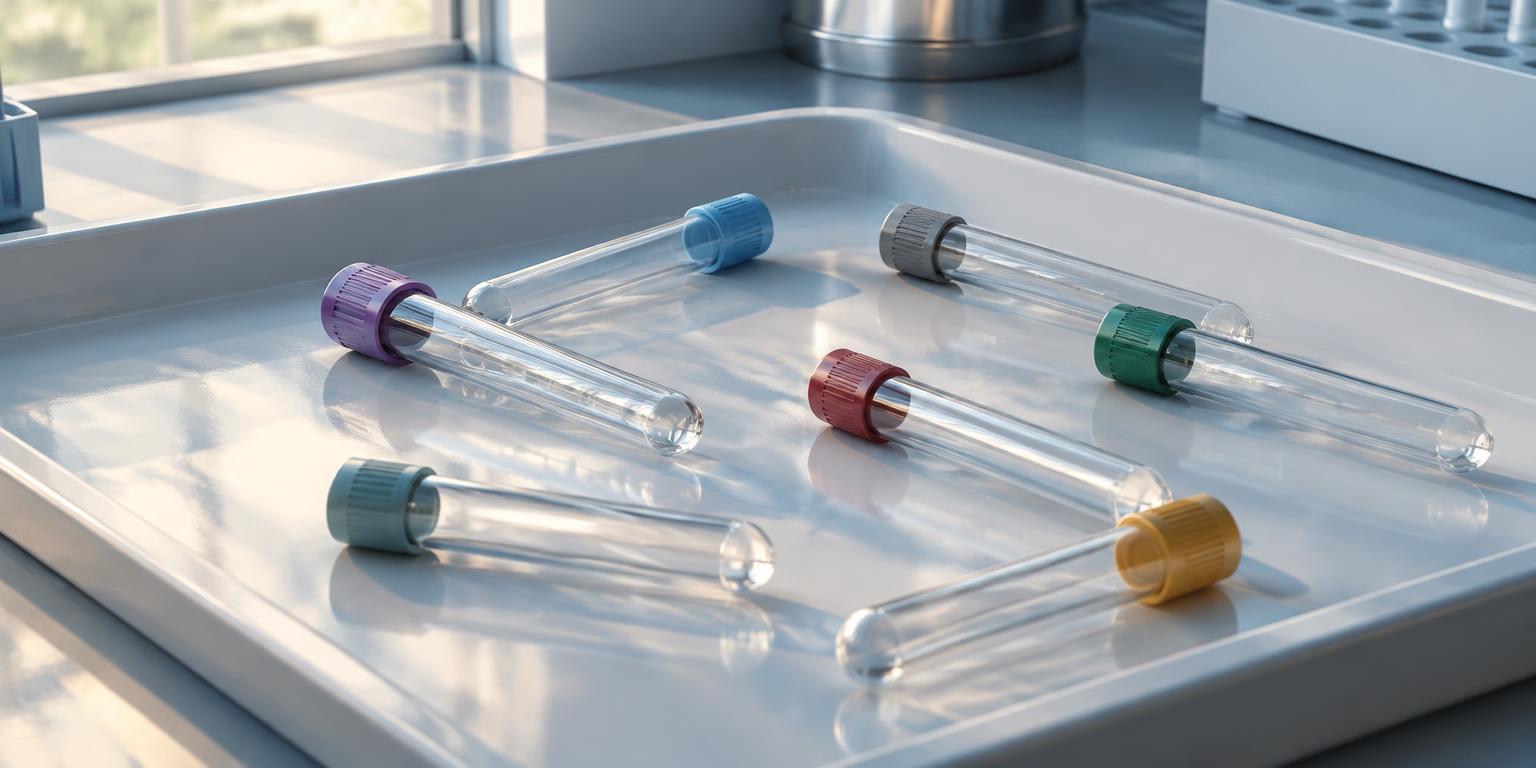
Your doctor checked a hemoglobin and called it a day. I check what actually explains why you're exhausted, foggy, anxious or not yourself.
Thyroid, all of it.
TSH, free T4, free T3 and antibodies. Not just the one number that comes back "normal" while you feel like wet cement.
Iron and ferritin.
Because "your blood count is fine" is not the same as "you have enough iron." The cutoff for women was doubled in 2026. Fifty years late.
B12 and vitamin D.
Cheap tests. Skipped constantly.
Inflammation.
hs-CRP, because a fire you can't see still burns.
Your heart, properly.
ApoB, Lp(a) and homocysteine. Cholesterol is the headline. These are the story.
Your hormones, the whole cast.
Estradiol, progesterone, testosterone, SHBG, DHEA-S, FSH and LH, measured where they help answer the question. Perimenopause is diagnosed by how you feel and what your cycle is doing, not by one blood draw on one random Tuesday. Anyone who tells you otherwise is selling a test.
You're not crazy. You were under-tested.

Your body keeps time. Medicine checks once.

Book.
Send me two or three dates and times. I reply by email with your invoice, and your visit is confirmed once it's paid.
A long first visit by video.
Your labs and a few at-home measurements come first. Then ninety minutes with me, start to finish.
A written plan.
Your body, explained in plain English, in a report that is yours to keep. The decisions stay with you.
Follow-up.
If you want to come off a medication, we do it slowly, over ninety days. If you want the deep version, there's the Week.
Flat fees. No insurance billed. The Terrain Assessment is credited in full to the Week if you book within 90 days.
Book a visit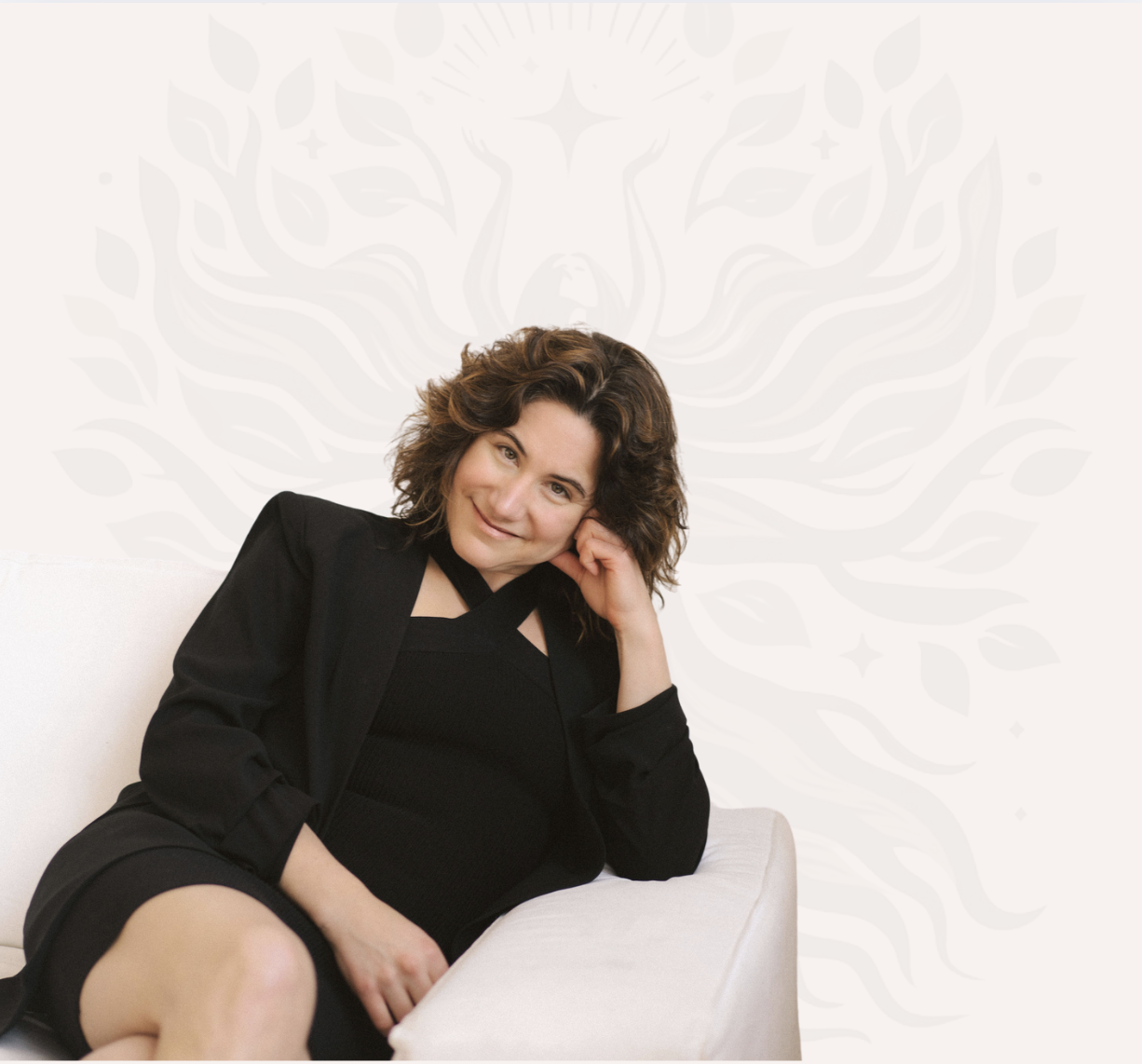
I'm a board-certified family physician, fellowship-trained in integrative medicine through the University of Arizona, with advanced training in bioidentical hormone replacement therapy. I hold medical licenses in twelve states. A big part of my residency was psychiatry, and mental health has been at the center of my work ever since. I also facilitate the Week, a women's immersion at Mauna Lani. I live on the Big Island of Hawaiʻi. I take my time, I explain everything in plain English, and I don't write a prescription to end a visit faster.
More about my work
Mechanism gets a citation. Every claim about how the body works carries a grade you can check.
History gets a document. Every claim about what was done to women carries the record.
The sacred gets my own voice. When I speak of source, of rhythm, of the shadow, I say it as mine, and I never dress it up as data.
I won't tell you cancer isn't real, that medicine never works, or that science is fake. I'll show you the record in plain language, and the decisions stay yours.
I don't heal anyone. You do.

Eight women. One week. The ocean does some of the work.

Eight women. Sunday to Friday at Mauna Lani. Ninety days of care after you leave.
See the Week
Psilocybin, MDMA and ibogaine are being studied seriously again for depression, trauma and addiction, after decades on the shelf. I'm following the research closely and building toward offering this work legally and safely. When it's ready, you'll hear it here first.
You will also hear from Dr. King now and then.

0% vs 0%
In the medical journals, 94% of antidepressant trials looked positive. By the FDA's own count, 51% were. I've prescribed these. Then I read the trials nobody published.
Turner et al., New England Journal of Medicine 2008.
Read the receipts